BUILD

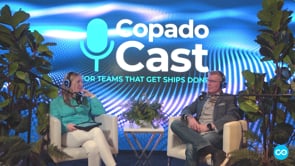
Ash Finnegan sits down with Ben McCarthy, founder of Salesforce Ben, to separate AI hype from the everyday reality of Salesforce development.
They explore technical debt, trust in AI, and the practical skills professionals need as their roles evolve.



.jpg)


Ash Finnegan sits down with Ben McCarthy, founder of Salesforce Ben, to separate AI hype from the everyday reality of Salesforce development.
They explore technical debt, trust in AI, and the practical skills professionals need as their roles evolve.
What Salesforce practitioners are experiencing as AI adoption grows alongside technical debt and delivery challenges.
How relevant data, clear permissions, and explainability help teams evaluate AI outputs and build trust.
Why hands-on experimentation, sound judgment, and business understanding matter as AI changes Salesforce work.
Read the full transcript or explore key moments from this episode.
Ash Finnegan [00:04]
Hi everybody, and welcome to "CopadoCast," the show that is for teams that get ships done. Today my guest has been covering the Salesforce ecosystem longer and probably more honestly than almost anyone I know. Ben McCarthy is the founder of Salesforce Ben, one of the best go-to resources for Salesforce practitioners worldwide."
Ben McCarthy [00:28]
Thank you so much. It's great to be here.
Ash Finnegan [00:29]
It's great to have you here. Can you tell me a little bit about your journey, why you create Salesforce Ben, and how it's grown over the years?
Ben McCarthy [00:37]
I'm one of those people that kind of has had loads of projects on the go at any one time. I'll start a hobby and then buy the stuff and just put it down. And Salesforce Ben, at the time, I was working as an admin in my first sales and savvy role, and I just started. It was before Trailhead, and there wasn't too much documentation about, so what I was finding was there was a lot of things I was working on, like implementing new features that actually weren't documented whatsoever. So I just started writing them down. Then it kind of morphed over time to include news and Buzzfeed-style articles, 10 best practices in Salesforce flow, that kind of stuff.
Ash Finnegan [01:08]
Yeah.
Ben McCarthy [01:09]
And now we've kind of evolved to more of a media company, so we focus on Salesforce. We also have a ServiceNow publication, which we started about 18 months ago, and we do physical events, online events, webinars, and a bit of everything, really.
Ash Finnegan [01:22]
Yeah. And I think one of the things we love so much about you, and we're very big into our community who will be watching this, so we've got over 145,000, is your commitment to the front-end user, the developer, what they need, and that's really important to Copado, and that's something I think where our partnership works really well. And we've obviously done the e-book now that we've just launched around the state of Salesforce delivery, AI delivery.
Ben McCarthy [01:48]
Yeah.
Ash Finnegan [01:49]
And that's really taken off and is getting a lot of gain and interest. So we'll also tell people here how to access that at the end of the show. But I have some questions for you, so we're going to dive in straight away.
Ash Finnegan [02:02]
So starting off, you built Salesforce Ben into one of the best go-to resources for Salesforce practitioners. That means you're sitting closer to this community more than most. What does the average Salesforce professional actually look like right now?
Ben McCarthy [02:18]
I thought this was such an interesting question because it's something that we're talking a lot about inside of Salesforce Ben at the moment, which is we think about the roles as admin, developer, consultants, and those kind of buckets. But actually, when we look at the people that subscribe to our site, the job titles are so varied now. You could be a Salesforce admin but have a title of VP business systems or something like that. So it's so disparate, and we're trying to work out what the ecosystem looks like now. But I think in terms of the average Salesforce professional, I think a lot of them are worried at the moment. Our surveys say that. It's a confusing time. I think last Dreamforce was maybe more confusion. This Dreamforce, it seems to be quite a bit more clarity, actually-
Ash Finnegan [03:02]
Yeah
Ben McCarthy [03:03]
where we're going. So I think the average Salesforce professional is probably a bit scared, probably dealing with a lot of legacy technical debt, the kind of same old issues. But then I would hazard a guess that they're quite optimistic at the same time as being unsure because of AI. We've talked a lot about this, about AI adoption in the Salesforce ecosystem, and it's individual users not necessarily rolled out in the company. It's nearing 100% across roles and I think architects are 100%, developers are near 100%, and admins are behind a bit, but it's still doubled over a year or something like that. So I would say it's definitely a weird time, but it feels like we're on the precipice of something.
Ash Finnegan [03:43]
Yeah. And it is. I think it's the uncertainty and the unknown.
Ben McCarthy [03:47]
Mm-hmm.
Ash Finnegan [03:48]
That's afraid in a lot of places.
Ben McCarthy [03:50]
And the sensationalized media headlines.
Ash Finnegan [03:52]
Yeah.
Ash Finnegan [03:53]
Exactly. So if we look at this, you talk to developers, admins, architects every day. That's core to your heart and what you do. What's the conversation that keeps coming up that nobody on main stage is having? Do you find that there's any back-channel conversations?
Ben McCarthy [04:09]
I think a lot of people now have been in the Salesforce ecosystem for a very long time. So there was a period of time, probably when I joined in 2019, I want to say, no, 2012, actually. But I think around that time, 2012 to maybe 2020, lots of new people were joining, so there was a lot of people. But now people are used to Salesforce's rhythm throughout the year in terms of product launches and stuff like this. But I think the conversations that aren't happening on main stage are for a good reason, because they are quite boring. And it's stuff like governance, and it's stuff like security, it's stuff like technical debt. It's all this stuff. I remember working on a project maybe six years ago or something when I was running a consultancy, and someone was saying, "Oh, we've got Sales Cloud, we've got Service Cloud, and we've just got Community Cloud, and it's all too confusing.
And when we make a change in Service Cloud, it breaks in Community Cloud," or something like that. And that was like six or seven years ago.
Ash Finnegan [05:02]
Yeah.
Ben McCarthy [05:02]
"
Ash Finnegan [05:05]
Yeah.
Ben McCarthy [05:05]
And now it's going to be a whole other ballgame. But I think ironically, or even not ironically, but AI has come along, and there's a lot of worry about it, but also that is the thing that could save these Salesforce orgs who are-
Ash Finnegan [05:19]
Yeah
Ben McCarthy [05:19]
out of control and they've got 300 fields on the task object or-
Ash Finnegan [05:23]
Yeah. So some of the challenges right there flow quite nicely into my next question, which is, honest take, not the keynote version. Do you believe Salesforce delivery is actually broken, or is technical debt and deployment pain just the nature of working on a platform this complex?
Ben McCarthy [05:42]
I don't know if it's broken. I was never a developer or could understand DevOps at a really deep level. And when I joined this Salesforce grad program in 2012, I was amazed because I did information systems, so it's like a half computer science, half business. So I understood business systems, not necessarily code." So I think it's kind of natural the way it's evolved. Yes, Salesforce could probably have put more effort into the tooling around that, but then it's not really their bread and butter. Their bread and butter is sales, service, marketing. I think it's also, there are so many varied ways of doing a project. If you ask consultants all over the world, I'm sure if you ask the people who have been at it a very long time, I don't know, they might have completely different views, but they might align to some degree. But I know back when I was delivering projects when I was a graduate, just thrown onto-
Ash Finnegan [06:41]
Yeah
Ben McCarthy [06:41]
projects, basically. A lot of consultancies used to do that, just throw graduates and see what happens. So a lot of those orgs wouldn't have been built with good foundations. But at the same time, you've probably got a lot of orgs out there that are using platforms like Copado. They've got a really-
Ash Finnegan [06:56]
Rugged
Ben McCarthy [06:56]
well-oiled ship, and everything's just working well. They're deploying regularly. So I think it's just so dependent. It's kind of like AI. You can use AI for anything, and the way that you build on Salesforce, there's no restriction. You can do what you want.
Ash Finnegan [07:09]
And like you said, I remember doing my Salesforce project, and we did a whole move to Salesforce Lightning. So CPQ, CLM, and-
Ben McCarthy [07:18]
A few.
Ash Finnegan [07:18]
Yeah. So I was one of the first SteelBrick CPQ implementations, or far the first implementation partner, and Salesforce rushed to the second. But that pain of, like you said, the data, the migration, understanding what happened. And that was six, seven, eight, maybe probably eight years ago when I was doing this, the SteelBrick CPQ implementation. And it was such a huge project, and we had to do it in six months. But yeah, there's so many plasters put on those systems over the years. I do think technical debt and data, and they're building on top of stuff, I think is-
Ben McCarthy [07:52]
Yeah
Ash Finnegan [07:52]
quite confusing, because then we tried to implement Marketing Cloud, and then we brought in Community Cloud, and then Service Cloud, and it was just highly complex. So I do think technical debt, is there's a lot of it there over time, and different developers, like you said, different admins, different consultancies building on the same thing over a period of time. Maybe that's what's causing a lot of the real challenges. But it was a fun project. I learnt a lot.
Ash Finnegan [08:17]
But like we said, Salesforce has been on massive expansion. Data 360, Agentforce, MuleSoft, Slack, and now AI is just everywhere. It's no longer just the layer. It's everywhere. From where practitioners actually sit, is the platform getting better or just bigger?
Ben McCarthy [08:37]
I think most people would argue bigger. That has kind of been Salesforce's game plan, I think. They wouldn't admit it, but their strategy's always been land and expand. So their land was sales, go to service marketing. And that's what they did for years, right? Between a period of maybe, I don't know, 2012 when Service Cloud, 2012, 2011 to maybe even when Slack was probably their last Thank you. Their last major, huge, I know it implements, I suppose, a few years ago, but yeah, they were just dominating every product vertical, basically.
Ash Finnegan [09:09]
Yeah.
Ben McCarthy [09:10]
And I remember the days when, with Sales Cloud, like when Lightning was coming around-
Ash Finnegan [09:15]
Yeah
Ben McCarthy [09:15]
it seemed like every release there was huge new changes coming, which actually maybe is not a good thing they keep doing that because there's so much-
Ash Finnegan [09:22]
Yeah
Ben McCarthy [09:22]
correct migration needed. But it felt like you got a lot more, and I think now it's more smaller tweaks, but maybe that's because the platform's mature and most of the tools are there to-
Ash Finnegan [09:33]
Yeah. And do you think they're well integrated, though? I remember I had challenges when I was trying to get them to work with ID. So they're adding on things, but there's often-
Ben McCarthy [09:42]
Yeah
Ash Finnegan [09:42]
a lot of-
Ben McCarthy [09:43]
It's connected, so it's all, Marketing Cloud was the exact target, so that's sitting over there, and the other Marketing Cloud connector, and then... But it's also defense. I'm not too completely up to date with this, but I believe they're moving a lot onto the core platform right now.
Ash Finnegan [09:58]
Very.
Ben McCarthy [09:59]
The marketing next or some-
Ash Finnegan [10:01]
Yeah.
Ben McCarthy [10:03]
And there was another big one. Data. Oh, well, Data Cloud is-
Ash Finnegan [10:06]
Yeah
Ben McCarthy [10:06]
there as well now, so arguably, maybe this is the time actually that Salesforce are, they've expanded and now they're-
Ash Finnegan [10:14]
Trying to knit it all together.
Ben McCarthy [10:16]
Yeah. Which I suppose they have to with AI anyway, because I think the feedback I hear about Salesforce AI is it's okay, but they put stuff out very quickly, and they're still developing their ideas. CloudForce potentially competes with Agentforce, so what's going to happen with that?
Ash Finnegan [10:33]
Yeah, and that obviously confuses people because stuff is getting shipped probably before it's ready. And AI relies on good data. The foundation of it is the good data, the good information, the good context. So I think when a lot of people have technical debt and have a lot of somewhat disconnected systems that they're trying to cobble together and keep up with what Salesforce is bringing out, it must make the job so much harder.
Ben McCarthy [10:59]
Yeah.
Ash Finnegan [11:00]
And almost impossible. So you talk to the community every day. When someone tells you they don't trust AI in their delivery pipeline, what are they actually afraid of? What does fear look like in the real world when they're being told to use AI and AI is coming and you need to adopt it but-
Ben McCarthy [11:18]
It probably depends on your level of understanding of AI. If you ranked, or not ranked, but got everyone to score themselves out of 10 or something and got people to be honest, I'm sure people would put themselves on threes and twos and fives and up a bit. And I think maybe the less you understand about it, the more afraid you are about it because you hear about this, I don't know if this is much of a controversial opinion, but everyone's talking about the Hugging Face incident and stuff like that. But these, maybe a bit of a conspiracy theory, but these big tech companies, they control how they are perceived and stuff like that. And there's lots of come up and down about regulate AI or not and all kind of stuff like that." But if you understand it a bit more, you're probably going to be more like, "Okay, well, I've given this AI certain permissions, so it can't do this.
I'm okay with that, but just tell me what you're doing, and don't do anything without approval," those kinds of things.
Ash Finnegan [12:19]
Yeah.
Ben McCarthy [12:19]
So I think it's, yeah, transparency into what the AP-
Ash Finnegan [12:24]
Yeah
Ben McCarthy [12:24]
thing is doing.
Ash Finnegan [12:25]
And that definitely, again, plays very well into my next question around the data obviously said the number one thing that would make people trust AI is more around explainability. Not a track record or more oversight, but understanding the decision that they're getting from AI. Is that what you're seeing also is that they really want to know how it's coming to the answer that they're getting?
Ben McCarthy [12:52]
Yeah, I'm not too sure, actually. I'm just trying to think of some kind of use cases like generating... I suppose, yeah. I think an ideal world, if you're using a chatbot, an AI coding one on one screen, you had the output, another you had what you're typing, and then another one that's something which is diving in deeper in the specific ways that you want. So if you just wanted, and then maybe this box over here could run some tests and test the code against your test or whatever, or maybe you just want it to explain how it came to its decision or something like that. So, I'm quite a big believer, especially after what Salesforce announced after Dreamforce in, or at Dreamforce, sorry, in terms of the UI, the kind of gen AI-
Ash Finnegan [13:37]
Yeah
Ben McCarthy [13:37]
UIs, is that a big part of the AI implementation adoption problem is the UI, I think. And I think in terms of a chat kind of box is great, but I want a widget over here showing me-
Ash Finnegan [13:50]
Yeah
Ben McCarthy [13:50]
what I want to, and here and here and here, and all that kind of stuff. So I think, yeah, the announcement I think is quite exciting because you can just type, and you can say exactly what you want on your UI, God, too many acronyms, and it just works.
Ash Finnegan [14:07]
Yeah. And do you think that they trust that it works?
Ben McCarthy [14:10]
The UI, or?
Ash Finnegan [14:11]
Well, just the response that they're getting back. AI is, as I said, is a, I know I have to double-check everything I get back from AI, and often I go challenge it, and I go back, "Oh, no, that's not right," because I know more than what I was looking for.
Ben McCarthy [14:25]
So what I've done recently, because I would hear about all this stuff, like, oh, you need data, you need context, blah, blah. But I didn't actually have any use cases I would use in my personal work life to actually do that. But one thing that we've done is we've analyzed all campaigns of Salesforce and content to get insights out-
Ash Finnegan [14:42]
Yeah
Ben McCarthy [14:43]
which I thought, yeah, was a pretty good use case. And then understanding that data and, yeah, feeding that into a Claude project and then being able to ask questions about the data and interrogating the data. And actually, what I'm finding now is there's not that many, or not that many mistakes I can see. There's probably plenty of hallucinations that I'm copy and pasting places.
Ash Finnegan [15:04]
Yeah. And that came up yesterday. Confidence is growing. It is getting better-
Ben McCarthy [15:07]
Yeah
Ash Finnegan [15:08]
than previous years at the start of AI where you are, there was a lot of hallucinations. I think context, people are spending more time on the data and the information they're putting in, and they're learning that. So it's going to be interesting to see how that trust goes.
Ben McCarthy [15:21]
Yeah. And what I also think is quite interesting is you always have the kind of levels of understanding how much you... Yeah. I think what is also quite interesting is the average person on the street right now and what they think about AI. Because my uncle, who's an entrepreneur, quite successful. Whenever I talk to him about AI, he's just like, "It's all hallucinations." And I'm like, "No, that was like three years ago."
Ash Finnegan [15:45]
It's getting better.
Ben McCarthy [15:46]
But I think the average person is going to be quite resistant because the media and all stuff like that-
Ash Finnegan [15:51]
Yeah
Ben McCarthy [15:52]
kind of hampered adoption a bit, which would be a shame, I think.
Ash Finnegan [15:54]
Yeah, no, like I said, and I think it's trial and error with people. Like you said, those that are using it, it's slowly getting that trust building up into it. But I do think context is really key, without a doubt.
Ben McCarthy [16:06]
And I would encourage people, even if you haven't tested feeding context and data in, then maybe choose something from your hobby or something like that, that you can just, I don't know, maybe you're into cycling, and you can feed it your Strava data or something, just and just see the kind of differences, yeah, with the data and without.
Ash Finnegan [16:22]
Yeah. More of that other side of it. Definitely.
Ash Finnegan [16:25]
If a Salesforce admin or developer is listening right now, not a director, not a VP, someone actually does the work, so the people that we're really talking about. What's the most important thing they should be doing differently in the next six months?
Ben McCarthy [16:40]
I would say learning how to be more productive with AI. I know that's a really-
Ash Finnegan [16:47]
Yeah
Ben McCarthy [16:47]
get out kind of answer, but it's like even if you zoom back before AI, like the amount of... When I was speaking to Ted, CEO of Copado, a couple years ago, he showed me a kind of prototype agent which took a call recording of a workshop setting, and then it would feed it and transcribe it. It would get the requirements out, goes the next place it goes. And I was looking at that like, I wouldn't trust that.
Ash Finnegan [17:13]
Yeah.
Ben McCarthy [17:13]
I wouldn't trust the translation. I wouldn't trust the data doing. That was two years ago.
Ash Finnegan [17:18]
Yeah.
Ben McCarthy [17:18]
Now, it's not that unfeasible to imagine. If you hired a smart Salesforce admin developer that knew how to use AI very efficiently, they were doing that kind of thing. And they weren't just feeding in a transcription going, "Great, there's the requirements. But then go, great." They were doing proper checks. They were analyzing. They were proving to their manager that they can use these tools and be safe, and they can ensure all the requirements are captured or whatever. That's quite an insane power for an individual to have.
Ash Finnegan [17:49]
Yeah.
Ben McCarthy [17:49]
And even if they're not an expert at requirements gathering, they can use AI to be like... I think that's an underrated, under-talked about feature of AI, which is, do you really need to pay for online courses anymore? Because I can create a personalized course for me on any topic with my-
Ash Finnegan [18:05]
Yeah. That's quite-
Ben McCarthy [18:06]
And maybe people learn from people, and that's fine.
Ash Finnegan [18:08]
Yeah.
Ben McCarthy [18:08]
But this is-
Ash Finnegan [18:09]
Yeah. Because when we launched our AI, I remember, and I had a similar conversation with Ted, so it was over about two and a half years ago. And I remember I started with Fadd, so I was obsessed with plan, build, test, release, operate. What are the jobs to be done? Where does Copado fit in? What's the real problems we solve? And we found when we launched AI, and that's what we did, like the plan agents. And user requirements was a really big thing because I guess I was a business analyst. I was running the Salesforce project. I knew I had to get all the requirements from the business, and that was a lot of work. So yeah, transcribing those calls of what they want and then putting it in actually became one of the biggest use cases. We actually found a new persona that the business analysts are now big users of Paddle."
Ben McCarthy [18:59]
Yeah.
Ash Finnegan [19:00]
Because now I can actually give Joe what he wants in the language he wants on the business requirements side in a way that a developer would like it.
Ben McCarthy [19:07]
Mm.
Ash Finnegan [19:07]
So yeah, I do find AI gave us more personas, the how they look like a Paddle." And I was just-- And I remember that exact conversation. And then two months later, we launched the five agents, and I was-
Ben McCarthy [19:25]
Mm
Ash Finnegan [19:25]
looking at what jobs they could do. Well, the big one was the requirements one.
Ben McCarthy [19:29]
Yeah.
Ash Finnegan [19:29]
But it gave me a whole new persona.
Ben McCarthy [19:31]
I think because I do the job I do, I'm skeptical by default."
Ash Finnegan [19:39]
Mm.
Ben McCarthy [19:40]
"
Ash Finnegan [19:46]
" And just watching how fast it's changed.
Ben McCarthy [19:55]
Yeah.
Ash Finnegan [19:55]
Like, when I look at what the agents are doing now, it's what our agents are doing now. Like we are getting to that in autonomous mode, agents working with other agents, and it's quite scary. It is very scary.
Ben McCarthy [20:06]
I was thinking that because it is like, we were told whenever it was, three, nearly four years ago when ChatGPT was released, everything was going to change overnight. And it hasn't really.
Ash Finnegan [20:17]
No.
Ben McCarthy [20:17]
The normal world's players were mostly the same. But actually, just talking about a few of these examples, I think in 2019, 2018, people would've trusted transcription as much.
Ash Finnegan [20:26]
Yeah.
Ben McCarthy [20:26]
Be trusting a transcription to record an entire meeting-
Ash Finnegan [20:29]
Yes
Ben McCarthy [20:29]
and not take any notes-
Ash Finnegan [20:30]
Yeah
Ben McCarthy [20:30]
and everything is still in that. But now, possibly.
Ash Finnegan [20:32]
Yeah.
Ben McCarthy [20:33]
Possibly and probably would. And that's just cut a huge time out. And then also, you were saying your colleague wanted something in a specific format or something.
Ash Finnegan [20:41]
Yeah.
Ben McCarthy [20:42]
It could be the era of personalization because one teammate wants in this format, another one does that. And for the one person to do all that and do it manually, but now you wouldn't.
Ash Finnegan [20:51]
You wouldn't, and it does allow people to move faster, which also means governance and testing has to be key.
Ben McCarthy [20:56]
Mm.
Ash Finnegan [20:57]
We're finding where more of our customers are coming to us now we're really heavy on the testing side. Because they can produce code really quickly. So we're getting this bottleneck of stuff is coming faster, but the governance layer still has to be there, particularly around the enterprise side of things.
Ben McCarthy [21:11]
Yeah.
Ash Finnegan [21:11]
So going back to the question, would you think the thing they should be focused on now is, you're doing a lot of experimentation with AI, but now you need to really focus on making it a true part of your process. That is, rather than I'm dabbling here with it and then I'm dropping it in here, it's how I'm going to work every day, and it's now become more standardized in what I'm doing.
Ben McCarthy [21:35]
It's a really hard one because, again, it's so hard to give advice to people who are on all levels. And I really don't know where I am on scale of one to 10. Like maybe a six or something like that.
Ash Finnegan [21:46]
Oh, yeah.
Ben McCarthy [21:46]
So I can't understand any of the deep stuff, but I understand how they work, and I understand systems, so I can do vibe code okay and stuff like that. But I've really only accelerated my learning of AI by using it for 50% personal stuff, 50%-
Ash Finnegan [22:01]
Yeah
Ben McCarthy [22:01]
work stuff. It was only then I, because I've read what a skill is before. I've written about some Salesforce-
Ash Finnegan [22:09]
Of course
Ben McCarthy [22:09]
skills, but I've never actually done it. And for me, that's how I learn. And as soon as I start learning things for my personal things or whatever, I'm just like, I connect the dots between a huge problem at Salesforce Ben and something that can be solved with AI. So yeah, I just think we need to dive in. I think personal projects are great fun, something like this.
Ash Finnegan [22:28]
Yeah.
Ben McCarthy [22:28]
I'm sure everyone has had a app or a website idea or a business idea that you can just make a website on just for fun-
Ash Finnegan [22:35]
Yeah
Ben McCarthy [22:35]
if you don't do anything about it.
Ash Finnegan [22:37]
So you often hear the term, bringing in that everyone can be a builder now.
Ben McCarthy [22:41]
Mm.
Ash Finnegan [22:42]
But is that fundamentally true? When I look at it, I'm like, do you still need that core understanding?
Ben McCarthy [22:49]
Builder like a-
Ash Finnegan [22:51]
Build a code. Yeah
Ben McCarthy [22:53]
anyone can be a builder? No.
Ash Finnegan [22:56]
Yeah.
Ben McCarthy [23:00]
No, and I think this is a bit of a controversial take maybe, but when Salesforce were having the trailblazer movement, like trying to get many people in, overall I thought it was fantastic. Loads of people that are here at Dreamforce today have got six, eight years under their belt after learning a trail around something like that. But I don't necessarily think everyone can become that type of professional.
Ash Finnegan [23:25]
Yeah.
Ben McCarthy [23:25]
Do you know what I mean? Because it's like any job, you have to have a certain specific type of skills.
Ash Finnegan [23:30]
Yeah.
Ben McCarthy [23:31]
Like you have to think in a certain way, and can you learn all this? Yeah, you can learn it, but I think you still need to-
Ash Finnegan [23:36]
Yeah
Ben McCarthy [23:36]
be a certain type of way. And I don't think it means only computer scientists can-
Ash Finnegan [23:44]
Yeah
Ben McCarthy [23:44]
be builders. I think anyone can. But I just think it's thinking in that logical way, in the system design way. And I think AI just overlays that and just accelerates some of the more complicated tasks, rather than... Yeah, I don't know. It's like it feels-
Ash Finnegan [24:02]
You still need to know what you're doing.
Ben McCarthy [24:04]
Yeah.
Ash Finnegan [24:04]
You still got to know what you're doing. That's what people know.
Ben McCarthy [24:06]
I mean, yeah, you just can't... I think the funny thing when people are saying about the SaaS apocalypse and vibe coding-
Ash Finnegan [24:12]
Yeah
Ben McCarthy [24:13]
usurping Salesforce, people are just like, "Salesforce is not going to get vibe coded out by a 13-year-old on OpenAI" or something like that. Like that's just-
Ash Finnegan [24:20]
It's not going to happen. No, and like I said, so I do think you still need to have your passion, your core, and understanding. Because I still think you need to validate and check that things are being done in the right way. So human in the loop is still key.
Ben McCarthy [24:32]
Yep.
Ash Finnegan [24:32]
Yeah.
Ben McCarthy [24:33]
Oh, yeah. 100%.
Ash Finnegan [24:35]
Good. I think everyone can feel a little bit better about their jobs and where they're going to go. So Salesforce as a platform, where it's generally strong, where is it vulnerable? And what about it's the direction a key... What is it, sorry, and what its direction keeps you up at night? What about its direction it's going could keep you up at night?
Ben McCarthy [24:59]
I mean, I can't lie, I was a bit scared when the SaaS apocalypse did keep me up at night. But I was just looking at the Salesforce's stock price, like the lowest it's been in like three or four years. And I was like, "Oh God, I was hoping it would get better." But I don't know. It's all up in the air. I think a lot of people criticize Salesforce a bit for they always jump on the next new thing. Like, we've forgotten about NFT Cloud now, but that was a thing a while ago on Zen.5 or whatever. But yeah, it evolved a lot. I think actually in Salesforce's defense, I think they're inherently built like a startup. Maybe they shouldn't act like a startup because they're employing 100,000 people. But they jump into something. If the trend takes off, then they obviously continue with it. NFT Cloud they didn't, because the trend didn't continue. But now they find themselves in the center of this AI world.
They've got Jensen and Sam and Dario here speaking. And they're making moves. They're making moves with Anthropic, which I don't know how it's seen on the wider world stage as the leading AI tool, but I think it's quite safe to say in the business world-
Ash Finnegan [26:15]
And it is
Ben McCarthy [26:17]
if it's not now, it's becoming very, very rapidly, especially I would say towards the tail end of Q1 this year, I think a lot of people are talking about a lot of people switching over. So I'm excited by their direction at the moment. I couldn't have said that over the past two years or something like that. But yeah. I'm excited. I don't think anything keeps me up at night at the moment.
Ash Finnegan [26:40]
Sure.
Ben McCarthy [26:41]
There certainly feels like a bit of a renewed optimism, I would say, at this Dreamforce. Last year was, there was a big announcement last year, I think it was Agentforce Voice, which I think was kind of expected and it's just like a feature. But there's renewed optimism, I think.
Ash Finnegan [26:55]
I think there's the clarity about what is happening, what these tools are, where it can be used.
Ben McCarthy [27:00]
Yeah. Yeah, and as you say, making that leap from how, there's no point rushing from number one on the scale of one to 10 if you don't know anything, jumping into a B2B project. It's probably better to skill up a bit, learn how to use it. But then saying that, there's huge adoption in ecosystems. I'm sure no one was actually at one, but-
Ash Finnegan [27:18]
Yeah. And you often said there exactly the words, like nothing's probably keeping you up at night. Do you think that's because Salesforce has made you more resilient in a way? Like you said, they experiment, they chop, they change." Do you think people now know that this is just the way that the ecosystem works so-
Ben McCarthy [27:43]
Yeah. The saving grace, I guess is, anything that Salesforce kind of launches, it takes time to bed in. I always talk about Data Cloud, because when Data Cloud first came out, it wasn't regarded as very good. It wasn't even certified as a CDP, and it was kind of a bit of a joke. But then it got good very quickly. And now it's, I don't know how much revenue, but it's doing quite a lot. So, yeah.
Ash Finnegan [28:08]
Yeah. So would you say the best advice you could give to any working with a Salesforce admin is, don't get too frustrated, just kind of go with the flow, and it all comes together somewhere down the road? There's going to be changes.
Ben McCarthy [28:22]
Like for their careers?
Ash Finnegan [28:24]
Yeah.
Ben McCarthy [28:27]
I think yeah. I think you need to stay open, I think for sure. I think in my experience, I'm kind of learning this recently, but people in tech are going to be very open to change, but I'm not too sure that everyone is. I don't know if you've been working here five, 10 years, you've found your way of doing it, and then no matter what comes along, you don't want to, you just want to do this thing. So, yeah, I would say be open, but also be quite purposeful in your careers at the moment, because it is a dangerous time. Jobs will be cut in their masses, I think, at some point. I don't think it'll be next year or the year after that, but. And I talk about this quite a lot, but I think the only thing that you can really look at is data. You can look at the headlines and all the stuff like this about AI coming to kill us and whatever. But we've been doing our surveys, I'm sure you have, for a long time, and we can see real trends now.
People are becoming more worried about their jobs, people are getting laid off, people accepting salaries for lower than they were previously on, which is all to be expected. It's the boom and bust economy cycle. It's absolutely constant. And it's like a boom from probably the end of the recession until 2022. I'm pretty sure the stock market, from that period, the SaaS market just went up and up. So it's been going up for a long time. The tech market has been good for a very long time. And then 2022 was like the falter, and it's been going down since then, but it feels this technology's real. It's not just marketing anymore. It's real, and we're talking about ways you can chuck huge chunks of time out of your job by not writing up notes manually.
Ash Finnegan [30:12]
Yeah.
Ben McCarthy [30:12]
Which I was doing in like 20- ... yeah, 2020, 2021, and it's just spending the whole meeting asking questions in a workshop and typing up all my notes.
Ash Finnegan [30:23]
Yeah.
Ben McCarthy [30:24]
I must have been frightened.
Ash Finnegan [30:25]
Yeah. You often think, how did we get, spent so much harder then. Now it's just so easy.
Ben McCarthy [30:32]
Yeah.
Ash Finnegan [30:32]
But do you think AI is going to give us that freedom to be able to focus on other things? So taking away that, because I find it, from a marketing perspective, being able to move faster up a certain path has allowed me to think things through a little bit more.
Ben McCarthy [30:47]
Yeah.
Ash Finnegan [30:48]
And challenge content, challenge workflows and how we're doing things. So I do think AI taking the time away is really good.
Ben McCarthy [30:56]
Yeah.
Ash Finnegan [30:57]
So, question for you. We've launched our State of Salesforce AI Delivery 2026. Is there anything in there that surprised you?
Ben McCarthy [31:11]
Anything that surprised me? I can't really pick out anything, but I really enjoyed writing it though, and collaborating with Parlor, and interviewing Fede. I would say the big takeaway from that whole project was Fede's quote, which was AI can, he thinks AI in 2026 can code better than an average developer. Which I haven't heard anyone say that before. To have someone like Fede say that, it took me back a bit." I'm not really one to judge that, but from what I've heard and what my friends tell me who are in software engineer positions, like yeah, probably.
Ash Finnegan [31:52]
Yeah.
Ben McCarthy [31:52]
Especially with the right context and the guardrails about-
Ash Finnegan [31:55]
Yeah
Ben McCarthy [31:55]
how you want the code written and all kind of stuff like that. So, that was the biggest takeaway for me. So yeah, I think, jobs are going to change. It's completely feasible that no one will write another line of code in a couple of years or something. And why would you if you can get an AI, which is... And then you have people in that oversight layer, and not focusing. It does seem a bit archaic, typing out code now. But yeah, I think it will help people focus on bigger and better things. Especially because I've not necessarily said that everyone's going to stop writing code because of the actual-
Ash Finnegan [32:35]
Yeah
Ben McCarthy [32:35]
but yeah, you know what I'm saying.
Ash Finnegan [32:37]
Taking out that element of actually sitting there and manually writing it all down and looking at the oversight, where it's going, the business objectives, all that. Which I know good developers do anyway.
Ben McCarthy [32:47]
Yes.
Ash Finnegan [32:47]
But this gives them way more time to do that.
Ben McCarthy [32:49]
And actually, you could argue that developer will be massively more valuable. One of those developers that can think about the business objectives-
Ash Finnegan [32:58]
Yeah
Ben McCarthy [32:58]
all that stuff, that's a dynamite position, I think.
Ash Finnegan [33:00]
Yeah. That's helpful. And I guess with the pace Salesforce is adding on new things and services and capabilities, developers are going to have to move a lot fast.
Ben McCarthy [33:08]
Yeah.
Ash Finnegan [33:08]
So, to keep up with the demands of what the business needs, from their Salesforce instance and all-
Ben McCarthy [33:14]
They're already overstretched at the moment.
Ash Finnegan [33:17]
Exactly.
Ben McCarthy [33:17]
With all the technical debt and the new features.
Ash Finnegan [33:20]
Yeah.
Ben McCarthy [33:20]
So something needs to change, really. And I don't think budgets are going to open up to hire way more people, so.
Ash Finnegan [33:26]
Yeah. But we've thoroughly enjoyed writing the report with you. We got a lot out of it, the team, Fede. So for that, I thank you. And we will be launching it out to our community, so we'll make sure everyone can get a copy of it and give us feedback on it, because we're working very closely with our community on getting feedback on our new products like Agentia Headless. We've had over 4,000 downloads of it already. So they're highly engaged in it. They love it. It's probably been the most successful thing we've spoken about here. Because developers still want to work in the ID. And the fact that they can access all of the tooling of Srdio in where they want to work, I think is changing the game. So we're also adapting to where our AI is going to be available, to where they're working, versus forcing them into our world. So yeah, we're also listening and adapting.
So yeah, I'm super excited for our relationship because I can see us doing a lot more work together. I'd like to get you close to our community. I know we've talked a little bit about that, and likewise the Stchia community. So with that, I want to say a massive thank you. And yes, I'll talk to you very soon. Thanks.
Ben McCarthy [34:31]
Thanks very much.
Ash Finnegan [34:32]
Thank you.
%20(1).png)
.jpg)
Be the first to know about new episodes, guest announcements, and CopadoCast updates.


.svg)