.svg)





%201.svg)
%201.svg)
%201.svg)


.svg)



.avif)


.avif)




.avif)









.avif)

.avif)
.png)











.avif)


.avif)


.avif)


アジャイルプランニング

When conversations in modern software teams turn to DevOps vs. Agile methodology, things can get fuzzy. Are they competing philosophies? Different paths to the same goal? Or two sides of the same coin?
The truth is simpler and more empowering. Agile and DevOps solve different problems, and when they work together, you get momentum from idea to impact. Let’s break it down, human-style.
Agile and DevOps are often mentioned in the same breath, but these methodlogies were built for different moments in the delivery lifecycle.
In software development, Agile focuses on how you build. It’s a development mindset designed around short planning cycles, frequent feedback, and continuous improvement. Agile helps teams adapt quickly, learn from users, and course-correct before small issues become big ones.
DevOps, on the other hand, focuses on how you deliver. It’s about automating and streamlining the path of software development from code to production so releases are repeatable, reliable, and far less stressful. Think continuous integration, automated testing, and smooth deployments, which are hallmarks of strong DevOps principles and practices.
In the ongoing debate regarding the difference between Agile and DevOps, it’s not about choosing one. It’s about knowing where each shines.
The confusion makes sense. Agile and DevOps share a lot of DNA. Both emphasize collaboration. Both value fast feedback. Both aim to deliver better outcomes for customers, sooner. And culturally, both push teams away from rigid handoffs and toward shared ownership.
But overlap doesn’t mean sameness. Agile stops short of production, while DevOps lives and breathes there. When teams blur the lines, they often end up strong in planning, but stuck in delivery. Or great at automation, but disconnected from business priorities.
That’s where clarity changes everything.
Understanding the difference between DevOps vs. Agile comes down to scope, focus, and flow.
Agile gives structure to uncertainty. Through sprints, scrums, backlogs, and retrospectives, developer teams break work into manageable chunks and deliver value incrementally.
It’s a rhythm that keeps development aligned with real user needs. Feedback isn’t an afterthought; it’s the fuel. Agile practices help teams ask the right questions early, reduce waste, and build with intention.
But having an Agile team alone doesn’t guarantee smooth releases. That’s where friction can creep in.
DevOps picks up where Agile development leaves off. It turns finished work into shipped value.
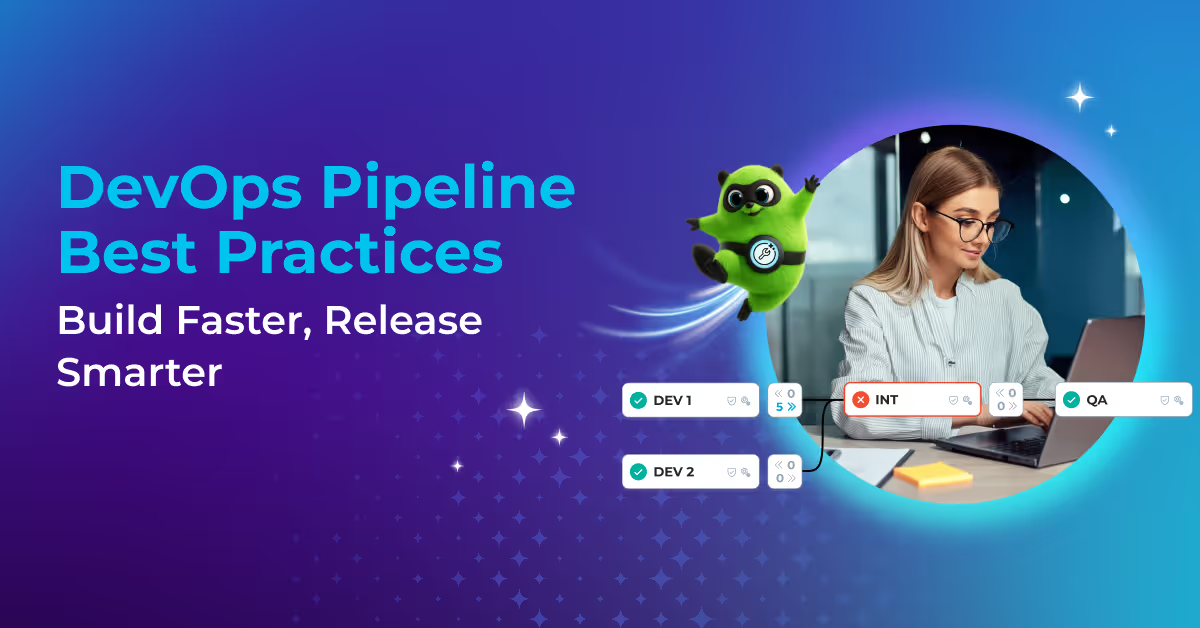
With strong automation, standardized environments, and DevOps pipeline best practices, teams can test, integrate, and deploy changes without crossing their fingers. Releases become routine, not risky.
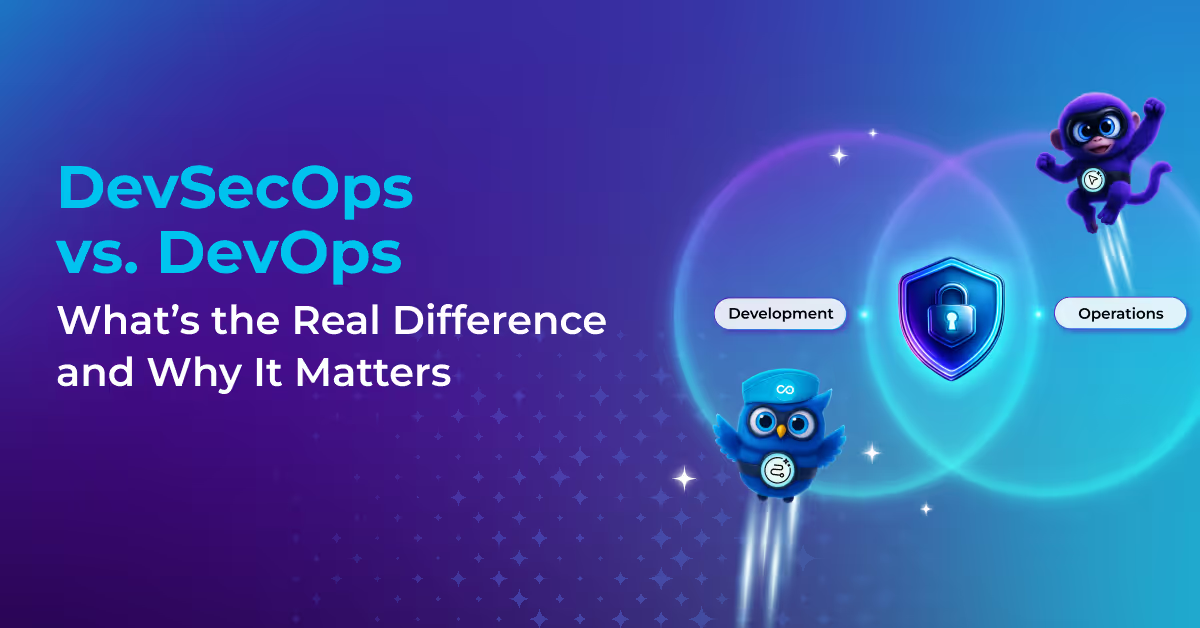
This is also where conversations about DevSecOps vs. DevOps enter the picture. Modern DevOps weaves security into the pipeline, building trust without slowing teams down for continuous delivery.
Here comes the magic: Agile defines what to build and why. DevOps ensures it gets delivered safely and consistently. Together, they close the development process loop.
Planning connects to production. Feedback flows from users all the way to the backlog. And both development and operations teams move faster without losing control. This isn’t just theory; it’s how high-performing teams operate.
Even when development teams understand the difference, alignment is hard, especially in complex Salesforce environments. Copado exists to remove that friction.
As a 100% Salesforce-native platform, Copado connects Agile software development and DevOps team execution in one place. You can plan work, automate delivery, and govern releases without slowing down. Built-in intelligence via Agentforce solutions helps surface risk early, while automation handles the heavy lifting behind the scenes. The result is a framework speed with control, and far fewer release-day surprises.
It’s DevOps methodologies reimagined to support how teams actually work.
Picture this: a Salesforce team running Agile sprints with confidence, but deployments are still manual and stressful. With Copado, that same team automates testing and deployments, reducing handoff friction and shipping updates more frequently.
Or consider a regulated enterprise navigating DevOps best practices while maintaining compliance. Copado’s native audit trails and security controls make governance part of the flow, not a blocker.
Across industries, teams use Copado AI DevOps solutions to unify the Agile manifesto and DevOps culture, increase release velocity, optimize feedback loops, and turn complexity into opportunity.
The debate around DevOps vs. Agile misses the bigger picture because these two aren’t rivals, but partners. Agile helps you build the right thing. DevOps practice helps you deliver it right. And when both are aligned, you move from idea to impact with confidence.
Copado empowers you to make that connection real. Less chaos. More clarity. Faster outcomes. Because the future is about building what matters, and delivering it without fear.
より速くリリースし、リスクを排除し、仕事を楽しんでください。
Try Copado Devops.
Explore our DevOps resource library. Level up your Salesforce DevOps skills today.


.avif)


.svg)