Articles
4/16/2026
10 minutes

How to Use AI in DevOps

Written by
Table of contents

How to Use AI in DevOps: Deliver Faster, Reduce Risk, and Take Control of Every Release

AI is reshaping DevOps in a way that feels less like an upgrade and more like a revolutionary turning point. What used to be reactive, manual, and often stressful is becoming proactive, intelligent, and far more predictable.

If you want to know how to use AI in DevOps teams without overcomplicating your workflows, you’re in the right place. This guide breaks it down in a practical, human way, so you can move faster, reduce risk, and finally take control of your delivery pipeline instead of just chasing it.

Why AI Is Transforming DevOps

Traditional DevOps relies heavily on predefined rules, where if something happens, there’s already a corresponding action to do. But software delivery isn’t always that predictable. It can be messy. 

Releases feel rushed. Testing takes too long. Issues show up when it’s already too late. And even with automation in place, you’re still reacting instead of anticipating. Here, AI tools close the gap by moving DevOps from:

  • Reactive → Predictive
  • Manual decisions → Intelligent recommendations
  • Static pipelines → Adaptive systems

Instead of waiting for problems to surface, AI analyzes patterns across your pipeline and flags risks before they slow you down. That shift from chaos to clarity is what makes AI DevOps solutions so powerful.

Core Areas Where AI Enhances DevOps

Across the software lifecycle, there are a few critical areas where AI consistently delivers real, measurable impact in speed, quality, and confidence.

Intelligent CI/CD Pipelines

CI/CD pipelines are the backbone of DevOps, but they’re often overloaded, inefficient, and hard to optimize manually. AI changes that.

Instead of running every test, every single time, AI identifies which tests actually matter for a given change, where bottlenecks are forming, and what's most likely to break in production. It can even:

  • Predict deployment risks before you hit “release”
  • Recommend safer rollout strategies (like phased deployments)
  • Automatically adjust pipeline execution based on past outcomes

So instead of guessing, DevOps engineers guided by data. This is where agentic AI DevOps starts to come into play, with systems that don’t just analyze, but actively recommend and adapt in real time.

AI-Powered Testing and Quality Assurance

Testing is one of the biggest friction points in DevOps. Having too many tests slows you down, while having too few increases risk. Figuring out the right balance is where teams often get stuck. And with machine learning, you can:

  • Automatically generate test cases based on code changes
  • Predict which tests are most likely to fail
  • Prioritize regression testing based on real risk—not assumptions

Instead of running everything, you run what matters most. That means faster feedback loops, higher test coverage (without the overhead), and fewer defects slipping into production. This gives QA teams sharper tools and better visibility.

Predictive Monitoring and AIOps

Monitoring used to be reactive. Something breaks, alerts go off, and teams scramble to fix it. With AIOps, systems continuously analyze logs, metrics, and events to:

  • Detect anomalies before users notice
  • Correlate unrelated signals into a single root cause
  • Predict incidents based on historical patterns

This is where AI becomes a true force multiplier. It reduces noise, surfaces what matters, and helps your team focus on solving problems instead of chasing them.

Step-by-Step: How to Implement AI in DevOps

You don’t need a full transformation overnight. The smartest approach involves incrementally layering AI into your existing DevOps processes where it can deliver immediate impact.

1. Identify High-Impact Use Cases

Where does your pipeline slow down? Where do errors keep repeating? Where does your team spend too much time on manual work? The goal is to apply AI where it matters most. Common starting points include:

  • Long testing cycles
  • Frequent deployment failures
  • Limited visibility into pipeline performance

Quick wins build momentum, and this momentum makes adoption easier across the board.

2. Prepare Data and Tooling

AI is only as good as the data behind it. If your pipeline data is fragmented, inconsistent, or incomplete, your insights will be, too. So before diving in, make sure you have:

  • Clean, structured pipeline data
  • Reliable telemetry from your systems
  • Tools that can integrate seamlessly

This is one of the biggest advantages of DevOps platforms that are built natively. Since Copado lives inside your ecosystem, your data flows naturally, without extra complexity.

This foundation makes everything else easier.

3. Integrate AI into Existing Pipelines

Think of AI as an upgrade, not a rebuild. Instead of replacing your tools, you enhance them:

  • Add AI-driven test selection to your CI pipeline.
  • Introduce risk scoring before deployments.
  • Layer predictive monitoring into your observability stack.

Over time, these small enhancements start to compound for faster pipelines and smoother releases.

4. Measure Outcomes and Optimize

If you can’t measure it, you can’t improve it. You should be able to track key DevOps metrics like deployment frequency, change failure rate, and mean time to recovery (MTTR). Then, compare the results before and after introducing AI.

You’ll typically see faster delivery cycles, fewer failed releases, and reduced manual intervention. And from there, you refine.

AI isn’t static; it learns. The more data it sees, the better it gets. And the more you use it, the more value you unlock.

AI in DevSecOps and Compliance

You want to move fast, but every release comes with risk. Security and compliance are often where speed goes to die. Manual reviews, last-minute checks, and audit anxiety all add friction right when you need confidence the most.

But instead of treating security as a checkpoint at the end, AI weaves it throughout your pipeline by:

  • Automatically scanning code for vulnerabilities as it’s written
  • Flagging risky changes before deployment
  • Enforcing policies in real time, not after the fact
  • Maintaining audit trails without manual effort

So rather than slowing you down, compliance becomes part of your flow. That’s the shift from reactive security to continuous assurance.

Governance and Risk Management Considerations

When AI starts making recommendations or even decisions, it raises important questions on whether you can trust, explain, or control it. And the answer should always be yes.

AI in DevOps works best when it’s guided, and not left unchecked. That means putting guardrails in place, such as:

  • Human oversight for critical decisions
  • Explainable insights so teams understand why something is flagged
  • Policy controls that define what AI can and can’t do
  • Auditability for every action taken

Because while AI can accelerate delivery, governance ensures you’re accelerating in the right direction.

Common Challenges and How to Overcome Them

AI in DevOps sounds great in theory. In practice, there are real hurdles.

Data Limitations

If your data is messy, incomplete, or siloed, AI won’t deliver meaningful insights. To overcome this problem, start small. Focus on one pipeline or system where your data is reliable, and build from there.

Cultural Resistance

Teams may worry about change or even ask, “Will AI replace DevOps jobs?” to which the short answer is no. AI doesn’t replace DevOps professionals. It removes the repetitive, manual work that slows them down, so they can focus on higher-impact tasks.

Position AI as a partner to your team mates, not a replacement. Show how it makes their work easier, not obsolete.

Over-Automation

Not everything should be automated. Too much automation without visibility can actually increase risk.

Here’s how to overcome it: Keep humans in the loop. Automate decisions where confidence is high but maintain oversight where it matters.

Integration Complexity

Adding AI to an already complex toolchain can feel overwhelming, so use platforms that unify your workflow instead of fragmenting it further. This simplicity can help you scale, while unnecessary complexity will only slow you down.

Scaling AI Across the Enterprise

Once you’ve seen success in one team or pipeline, the next challenge is to scale. Here’s what that looks like:

  • Standardized processes so every team follows best practices
  • Reusable AI models and workflows that don’t need to be rebuilt from scratch
  • Centralized visibility across all pipelines and environments
  • Cross-team collaboration so insights don’t stay siloed

By implementing AI, you’re building an intelligent delivery ecosystem. And when that ecosystem is aligned, teams move faster together. Risk is managed consistently, and innovation scales naturally. That’s how you go from isolated improvements to enterprise-wide impact.

How Copado Enables AI-Driven DevOps

Copado is built to bring AI into your DevOps lifecycle in a way that feels natural, not forced. Here’s how:

Intelligent Automation with Context

Copado’s AI doesn’t operate in a vacuum. It learns from your metadata, deployment history, and pipeline activity. AI amplification turns your experience into actionable insight. This is what powers smarter decisions in predicting risks, recommending actions, and helping you avoid repeat mistakes. 

Structured, Salesforce-Native CI/CD

Because Copado is 100% Salesforce-native, everything works where you already work.

No disconnected tools; no fragile integrations: just seamless CI/CD pipelines, built-in governance and compliance, and real-time visibility across your delivery lifecycle That native advantage means less setup and more momentum.

Built-In Compliance and Control

From audit trails to policy enforcement, Copado ensures every release is traceable, secure, and compliant. This ensures that you can move fast without second-guessing your process.

AI DevOps Solutions that Scale

Copado’s AI DevOps solutions are designed to grow with you, whether you’re starting small or scaling across global teams. And with innovations like Agentforce solutions, teams can take advantage of more advanced, agent-driven capabilities, bringing the vision of agentic AI DevOps to life in a practical, controlled way.

Build Smarter, Faster Releases with Copado

AI isn’t here to replace DevOps; it’s here to elevate it. When used thoughtfully, it helps you deliver faster, reduce risk, and make smarter decisions at every stage of the pipeline.

But the real transformation happens when AI is implemented with intention. At the end of the day, the goal isn’t just better automation, but also better outcomes. And when you combine the right strategy with the right platform, DevOps stops being a bottleneck and becomes your biggest advantage.

With Copado, you can build on clean data, keep humans in control, and scale what works. From idea to impact, the future is yours to build.

Sources

Book a demo

About The Author

Accelerating the Agentic Era in Brazil: Copado and Capgemini Deepen Strategic Partnership
Salesforce Source Format vs Metadata Format
Get Started with Agentforce in Salesforce
What Is Agentforce Salesforce?
Will AI Replace DevOps Jobs?
How to Use AI in DevOps
Agentic AI DevOps Explained
Copado Introduces Agentia™, Bringing Context-Aware AI Agents to Salesforce DevOps
How Does Salesforce Agentforce Work
Agentforce vs Einstein: Choosing the Right AI to Move from Insight to Action
Agentforce Developer Guide
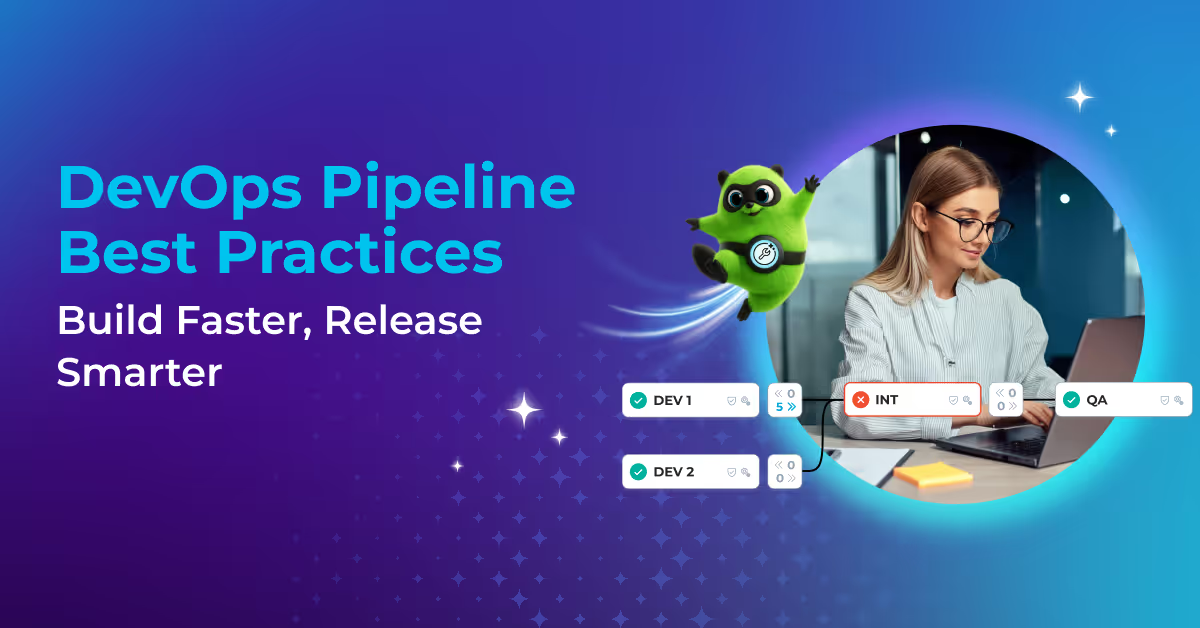
DevOps Pipeline Best Practices
DevSecOps vs. DevOps
DevOps vs. Agile
Generative AI in DevOps
How DevOps Teams Use AI to Win
Using AI in DevOps
Agentic AI in DevOps: Automation Solutions for Teams
Copado Awarded on CarahSoft’s GSA Schedule, Expanding Access for Federal Agencies
Salesforce Agentforce AI Capabilities and Solutions
Salesforce AI Agent Software Features for DevOps Teams
Copado Renews FedRAMP Authorization and Advances Toward IL5 to Support U.S. Military Organizations
Copado Appoints Rajit Joseph as Chief Product Officer to Accelerate AI-Driven Customer Success and Product Innovation
Copado Recognized in Salesforce 2025 Partner Innovation Awards
Copado Appoints Gaurav Kheterpal as Chief Evangelist to Accelerate Global DevOps Community Growth
Copado CI/CD & Robotic Testing Now TX-RAMP Certified for Texas Government
Org Intelligence: Why Context Matters So Much in Salesforce DevOps Tools
Hubbl Technologies and Copado Forge Strategic Alliance to Power AI-Driven DevOps with Deep SaaS Context
From Chaos to Control: Why Public Sector Teams Are Moving Beyond Manual Pipelines
Copado Hosts India's Flagship DevOps Conference in Response to Overwhelming Demand
What Does “Org Intelligence” Really Mean for Salesforce Teams?
Copado Launches Org Intelligence to Provide End-to-End Visibility into Salesforce Environments
Why Pipeline Visibility Is Key to Successful Salesforce DevOps Transformation
Copado Robotic Testing Now in AWS Marketplace, AI-Powered Salesforce Test Automation at Scale
Navigating User Acceptance Testing on Salesforce: Challenges, Best Practices and Strategy
Navigating Salesforce Data Cloud: DevOps Challenges and Solutions for Salesforce Developers
Chapter 8: Salesforce Testing Strategy
Beyond the Agentforce Testing Center
How to Deploy Agentforce: A Step-by-Step Guide
How AI Agents Are Transforming Salesforce Revenue Cloud
The Hidden Costs of Building Your Own Salesforce DevOps Solution
Chapter 7 - Talk (Test) Data to Me
Copado Announces DevOps Automation Agent on Salesforce AgentExchange
CPQ and Revenue Cloud Deployment: A DevOps Approach
Copado Launches AI-Powered DevOps Agents on Slack Marketplace
Redefining the Future of DevOps: Salesforce’s Pioneering Ideas and Innovations
Copado Announces DevOps Support for Salesforce Data Cloud, Accelerating AI-Powered Agent Development
AI-Powered Releasing for Salesforce DevOps
Top 3 Pain Points in DevOps — And How Copado AI Platform Solves Them
Copado AI Platform: A New Era of Salesforce DevOps
Copado Expands Its Operations in Japan with SunBridge Partners
Chapter 6: Test Case Design
Article: Making DevOps Easier and Faster with AI
Chapter 5: Automated Testing
Reimagining Salesforce Development with Copado's AI-Powered Platform
Planning User Acceptance Testing (UAT): Tips and Tricks for a Smooth and Enjoyable UAT
What is DevOps for Business Applications
Testing End-to-End Salesforce Flows: Web and Mobile Applications
Copado Integrates Powerful AI Solutions into Its Community as It Surpasses the 100,000 Member Milestone
How to get non-technical users onboard with Salesforce UAT testing
DevOps Excellence within Salesforce Ecosystem
Best Practices for AI in Salesforce Testing
6 testing metrics that’ll speed up your Salesforce release velocity (and how to track them)
Chapter 4: Manual Testing Overview
AI Driven Testing for Salesforce
Chapter 3: Testing Fun-damentals
AI-powered Planning for Salesforce Development
Salesforce Deployment: Avoid Common Pitfalls with AI-Powered Release Management
Exploring DevOps for Different Types of Salesforce Clouds
Copado Launches Suite of AI Agents to Transform Business Application Delivery
What’s Special About Testing Salesforce? - Chapter 2
Why Test Salesforce? - Chapter 1
Continuous Integration for Salesforce Development
Comparing Top AI Testing Tools for Salesforce
Avoid Deployment Conflicts with Copado’s Selective Commit Feature: A New Way to Handle Overlapping Changes
From Learner to Leader: Journey to Copado Champion of the Year
The Future of Salesforce DevOps: Leveraging AI for Efficient Conflict Management
A Guide to Using AI for Salesforce Development Issues
How To Sync Salesforce Environments | Copado
Copado and Wipro Team Up to Transform Salesforce DevOps
DevOps Needs for Operations in China: Salesforce on Alibaba Cloud
What is Salesforce Deployment Automation? How to Use Salesforce Automation Tools
Maximizing Copado's Cooperation with Essential Salesforce Instruments
From Chaos to Clarity: Managing Salesforce Environment Merges and Consolidations
Future Trends in Salesforce DevOps: What Architects Need to Know
Enhancing Customer Service with CopadoGPT Technology
What is Efficient Low Code Deployment?
Copado Launches Test Copilot to Deliver AI-powered Rapid Test Creation
Cloud-Native Testing Automation: A Comprehensive Guide
A Guide to Effective Change Management in Salesforce for DevOps Teams
Building a Scalable Governance Framework for Sustainable Value
Copado Launches Copado Explorer to Simplify and Streamline Testing on Salesforce
Exploring Top Cloud Automation Testing Tools
Master Salesforce DevOps with Copado Robotic Testing
Exploratory Testing vs. Automated Testing: Finding the Right Balance
A Guide to Salesforce Source Control | Copado
A Guide to DevOps Branching Strategies
Family Time vs. Mobile App Release Days: Can Test Automation Help Us Have Both?
How to Resolve Salesforce Merge Conflicts | Copado
Copado Expands Beta Access to CopadoGPT for All Customers, Revolutionizing SaaS DevOps with AI
Go back to resources
There is no previous posts
Go back to resources
There is no next posts

Explore more about

Agentia™ Advanced
Articles
May 12, 2026
Accelerating the Agentic Era in Brazil: Copado and Capgemini Deepen Strategic Partnership
Articles
May 8, 2026
Salesforce Source Format vs Metadata Format
Articles
May 7, 2026
Get Started with Agentforce in Salesforce
Articles
May 5, 2026
What Is Agentforce Salesforce?

Activate AI — Accelerate DevOps

Release Faster, Eliminate Risk, and Enjoy Your Work.
Try Copado Devops.

Resources

Explore our DevOps resource library. Level up your Salesforce DevOps skills today.

Upcoming Events & Webinars

E-Books and Whitepapers

Support and Documentation

Demo Library