.svg)





%201.svg)
%201.svg)
%201.svg)

.svg)


.avif)
.avif)
.png)
.avif)



%20Data%20to%20Me_BLOG_1080x600.avif)


.avif)


.avif)


.avif)


.avif)


Copado AI
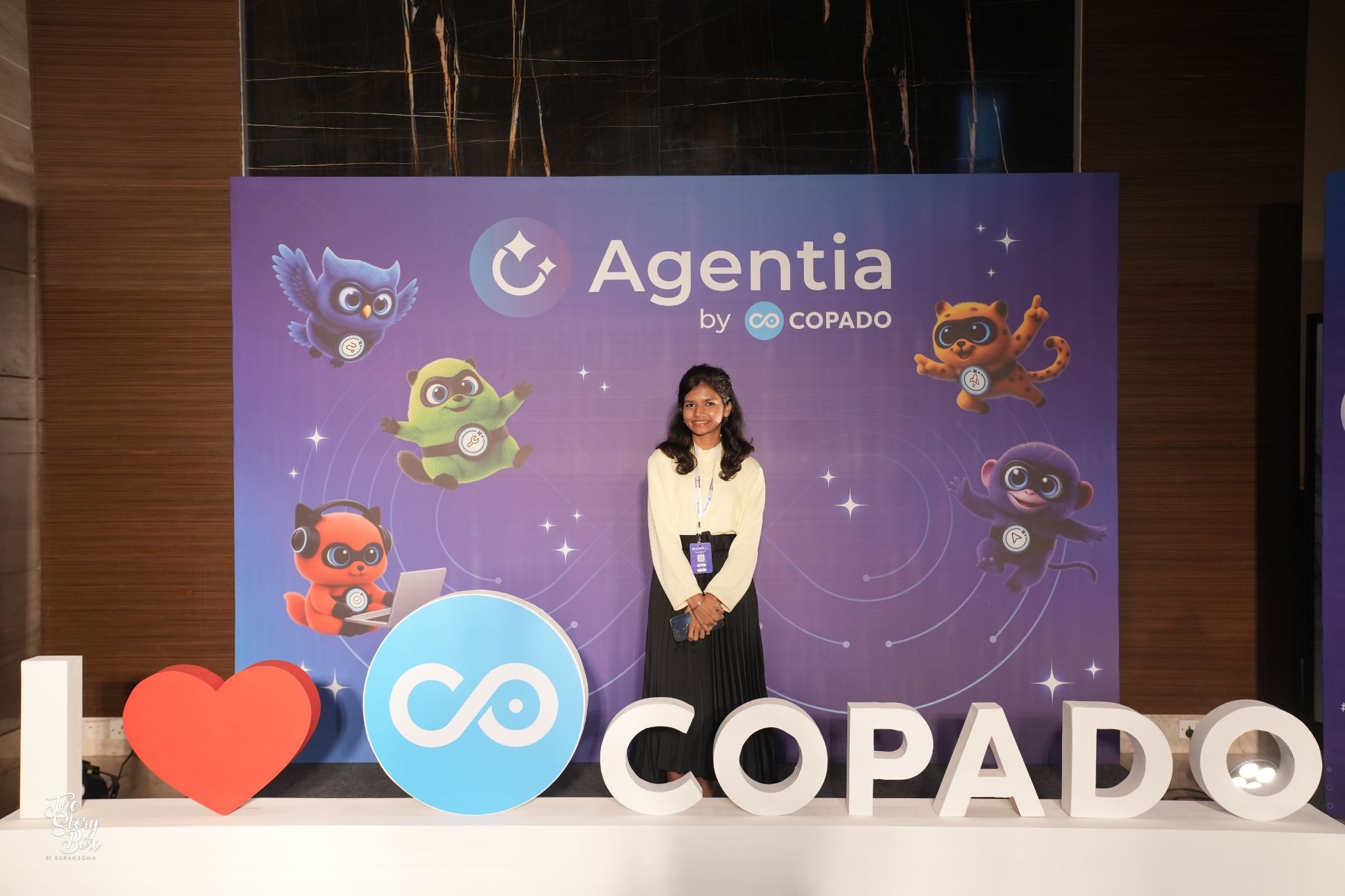
Akshara Thakur was 17 when she sat down to review Agentia Headless end-to-end. Not to build anything. Just to understand how it worked.
While exploring it, she asked a question that led somewhere else entirely: "If a team ran multiple Copado orgs instead of one, would they know if a failure like this is isolated to one org, or systemic across all of them?"
Most enterprise teams wouldn't know. The answer to that question became Fleet Radar.
Built on Agentia Headless and its JSON output over a couple of weeks of exploring, testing, and iterating, Fleet Radar is designed to monitor a fleet of Copado orgs. When something fails, it doesn't just flag the error, it correlates it across orgs, distinguishing local incidents from fleet-wide problems, and fires a Slack alert the moment something systemic is detected. From that alert, a developer can request an AI-generated fix suggestion from the Copado Plan agent without ever leaving the conversation.
Monitoring, correlation, alerting, AI-generated fix suggestions, all built by a student developer. And she kept a human in the loop intentionally.
But she wasn't done.
If Fleet Radar sends intelligence to Slack, Akshara's second tool lets you operate Agentia from it.
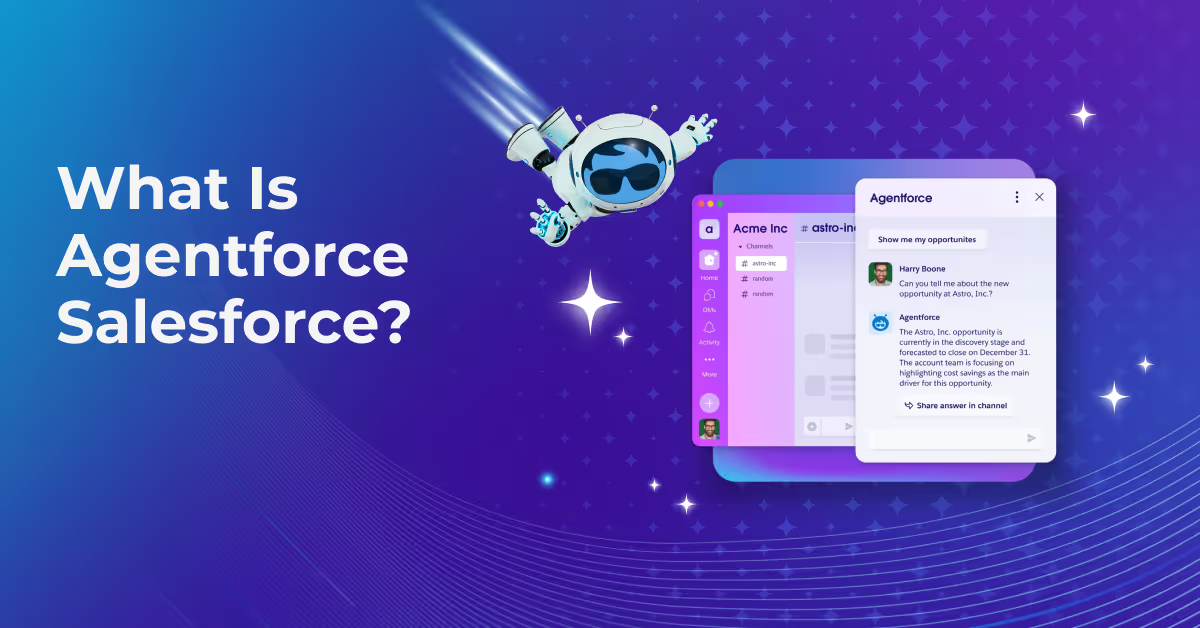
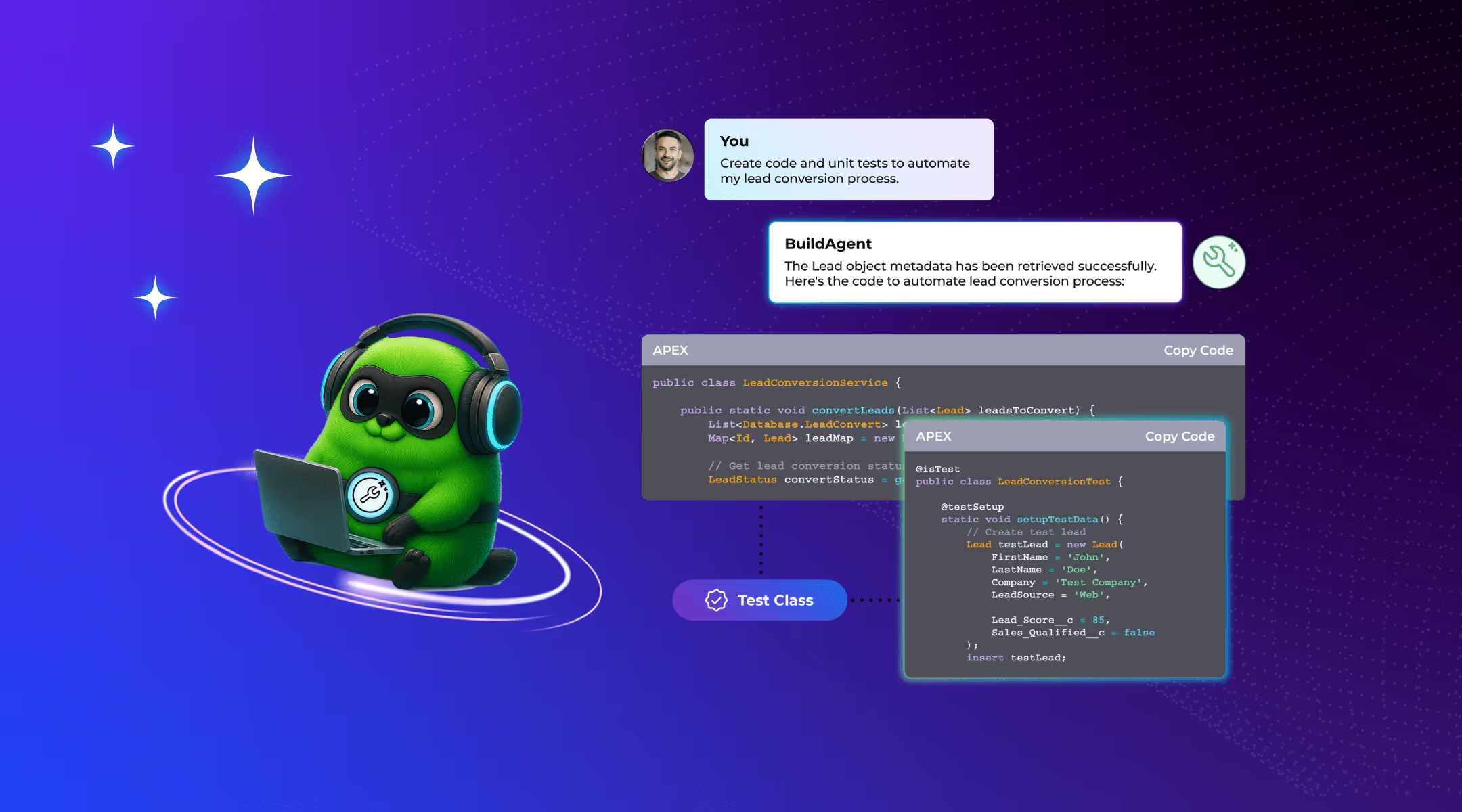
She mounted the Agentia Headless CLI on a server, built a Slack app on top of it, and registered /copado-plan as a custom slash command. The result: anyone on the team, developer, product manager, ops, can type a plain-English request in any Slack channel and get a fully structured Copado user story back in seconds.
She demonstrated it live. She typed: /copado-plan add the duplicate prevention in lead scoring process. The Copado Plan agent replied in-channel with a complete user story: title, role, business justification, acceptance criteria, edge cases. Nobody opened a browser. Nobody switched context.
The insight behind Slacktia isn't just convenience. It's access. By exposing the Agentia Headless CLI through a Slack slash command, she made Copado's agent capabilities available to everyone on the team, not just developers with an IDE configured. The whole team sees the work in a shared channel. The whole team can trigger it.
Together, Fleet Radar and Slacktia represent something the Agentia Headless team set out to prove: that when the DevOps pipeline is composable, and the CLI is scriptable, developers bring ideas the platform never anticipated. Akshara built both tools under her own project.
The design principle behind Agentia Headless is straightforward: the CLI doesn't care where it runs. It works in a code editor, a terminal, a server, a Slack bot. The interface is wherever the developer decides to put it. In Akshara’s own words: "Agentia Headless is basically Copado's DevOps and AI tooling built around the command line instead of just a browser, so it can run inside scripts, pipelines and other automation. What I find interesting about that is it turns Copado from something you simply use into something you can actually build on top of, which is exactly what I ended up exploring."
Akshara decided to put it everywhere. She's only 17, and she is just getting started. Are you ready to start building your own solutions in hours, not months?
Release Faster, Eliminate Risk, and Enjoy Your Work.
Try Copado Devops.
Explore our DevOps resource library. Level up your Salesforce DevOps skills today.


.avif)


.svg)