


.svg)


%201.svg)
%201.svg)
%201.svg)


.svg)

.avif)

.avif)

.avif)


.avif)
.avif)
.png)



.avif)


.avif)


.avif)


Agentforce
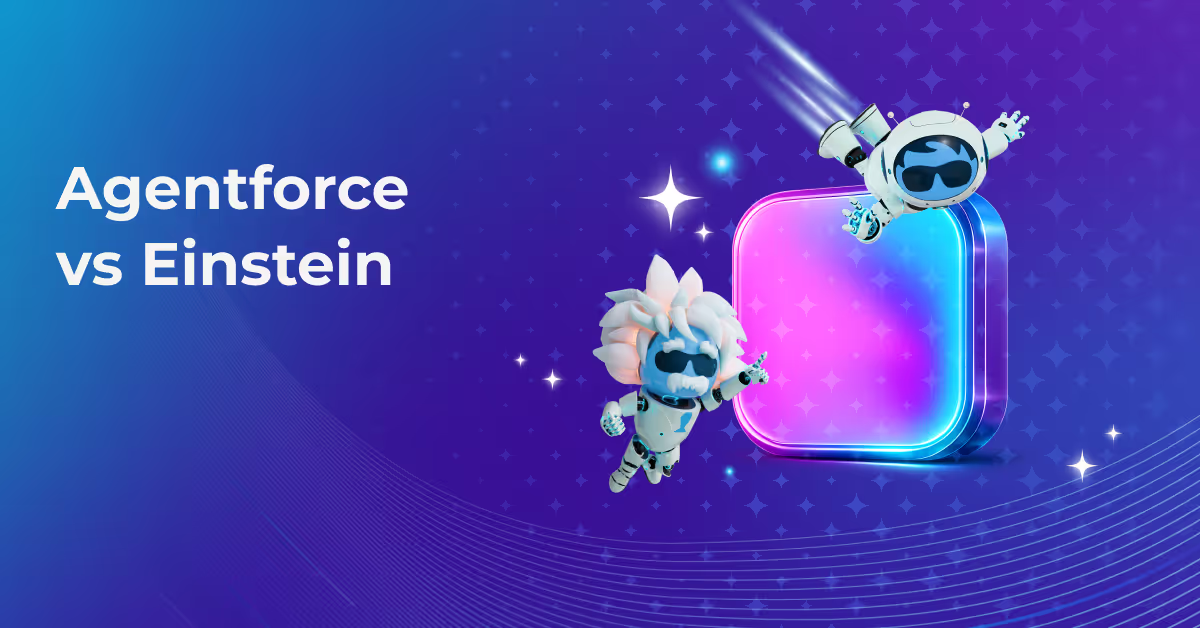
Salesforce’s AI ecosystem is evolving fast. For architects, CRM leaders, and enterprise teams, the real question isn’t just what Agentforce vs Einstein does, but how these tools help you move faster, stay in control, and deliver meaningful outcomes. Let’s break it down in a clear, practical way, so you can choose with confidence.
Salesforce has been investing in AI for years, but the landscape has shifted from simple predictions to intelligent, action-oriented systems.
Einstein laid the foundation by bringing AI into CRM workflows with predictions, recommendations, and automation. Agentforce AI agents build on that momentum, introducing autonomous agents that can take action, not just surface insights.
In short, Einstein helps you understand what might happen. Agentforce helps you do something about it automatically.
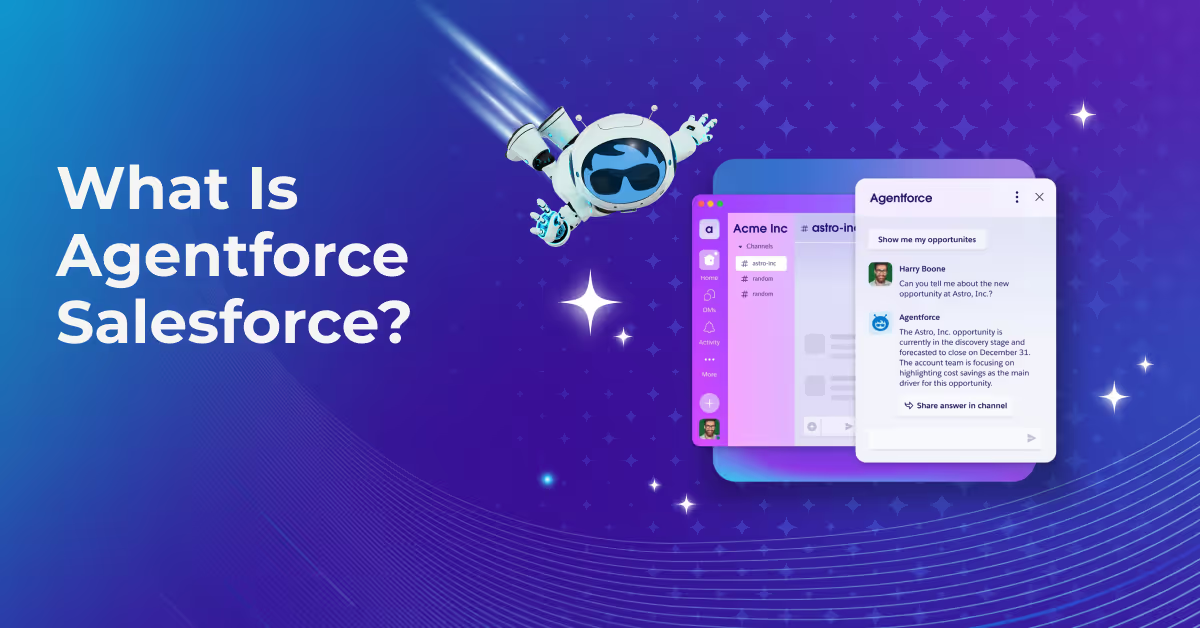
Agentforce is Salesforce’s next step into autonomous AI. Instead of just supporting users, it introduces AI-powered agents that can execute tasks, orchestrate workflows, and adapt in real time.
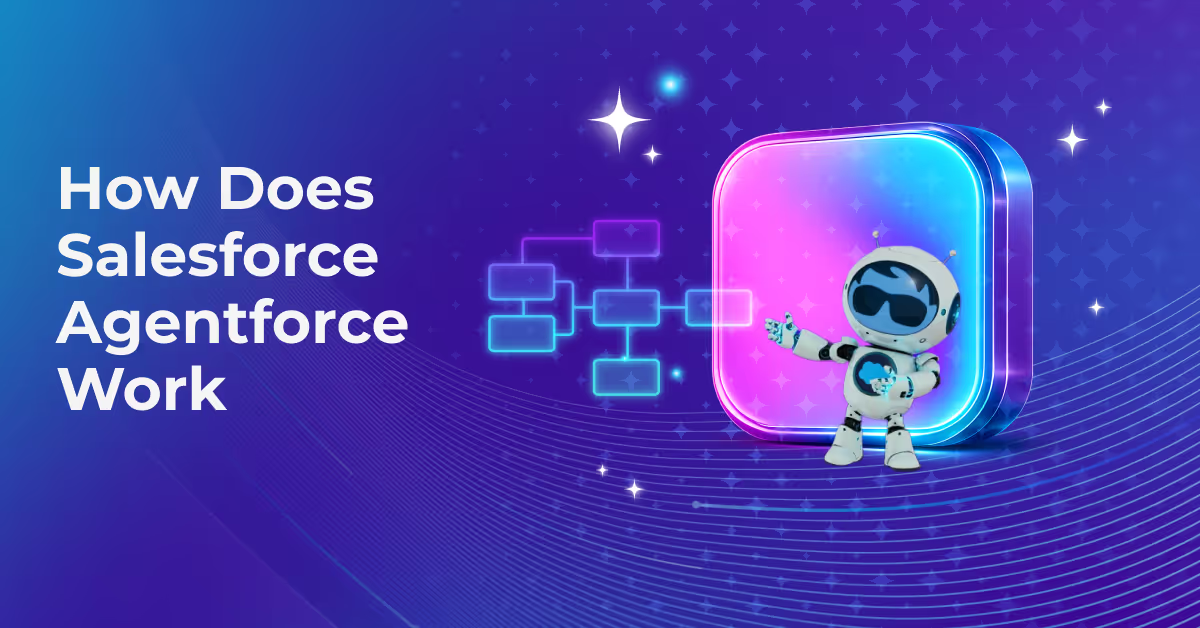
If you’ve been asking how does Salesforce Agentforce work, think of it like this: It combines generative AI, large language models (LLMs), automation, and orchestration into a system that can act independently within defined guardrails. Key strengths include:
It’s also supported by evolving resources like the Agentforce developer guide, helping teams design and scale intelligent agents tailored to their business.
Einstein is the Salesforce ecosystem’s long-standing AI layer, embedded across the platform. It focuses on predictive analytics and smart recommendations, helping teams make better decisions, faster.
From lead scoring to forecasting and chatbots, devs use Einstein to enhance existing workflows rather than replace them. Core AI capabilities include:
Einstein is a reliable, proven, and deeply integrated AI tool, but it’s primarily insight-driven, not action-driven.
While both solutions bring powerful AI to Salesforce, their key differences come down to how they operate, what they deliver, and the level of autonomy they bring to your workflows.
This is the biggest shift. Einstein works with you, offering insights inside workflows. Agentforce works for you, executing tasks through autonomous agents. If your team is overwhelmed with manual steps, an AI assistant can remove that friction entirely.
Einstein is rooted in predictive analytics, analyzing past data to forecast outcomes. Agentforce leans into generative AI, enabling systems to create responses, trigger actions, and adapt dynamically.
Einstein delivers insights at key moments. Agentforce orchestrates entire workflows from start to finish. For enterprise teams managing complex processes, this AI solution is a game-changer.
So, where do these differences really show up? Let’s look at how Agentforce and Einstein perform across real-world use cases.
Einstein shines in sales forecasting, lead scoring, and opportunity insights. It helps reps prioritize and act smarter. Agentforce, on the other hand, can automate follow-ups, manage pipeline tasks, and even coordinate actions across systems, freeing reps to focus on closing deals.
The Einstein bot vs Agentforce comparison is especially relevant here. Einstein bots handle structured, rule-based interactions. They’re effective, but limited. Agentforce agents can manage more dynamic, context-aware conversations and take action across systems, improving productivity, resolution times and customer satisfaction.
Einstein plays a valuable role in IT and operations by providing predictive insights like identifying deployment risks, highlighting anomalies, or forecasting system performance issues. It helps teams stay one step ahead, making smarter, data-driven decisions before problems escalate.
Agentforce takes it further by turning those insights into action. Instead of just flagging risks, it can orchestrate workflows, trigger remediation steps, and automate complex operational processes end-to-end.
Together, they create a powerful combination for an AI platform: Einstein helps you see what’s coming, while Agentforce helps you handle it automatically
Einstein is mature and stable, with well-defined governance models. With the Einstein trust layer, it’s easy to deploy and works well within existing Salesforce structures. Agentforce introduces more flexibility, but also more complexity.
With greater power comes the need for:
That’s why enterprise teams must think beyond features and focus on control, compliance, and visibility from day one.
Einstein is relatively straightforward to implement. It’s embedded, configurable, and quick to deliver value. Agentforce requires a more strategic approach:
This represents a shift in how work gets done. And that’s where structured DevOps becomes essential.
Here’s the reality: AI innovation is exciting, but without control, it can quickly turn into chaos.
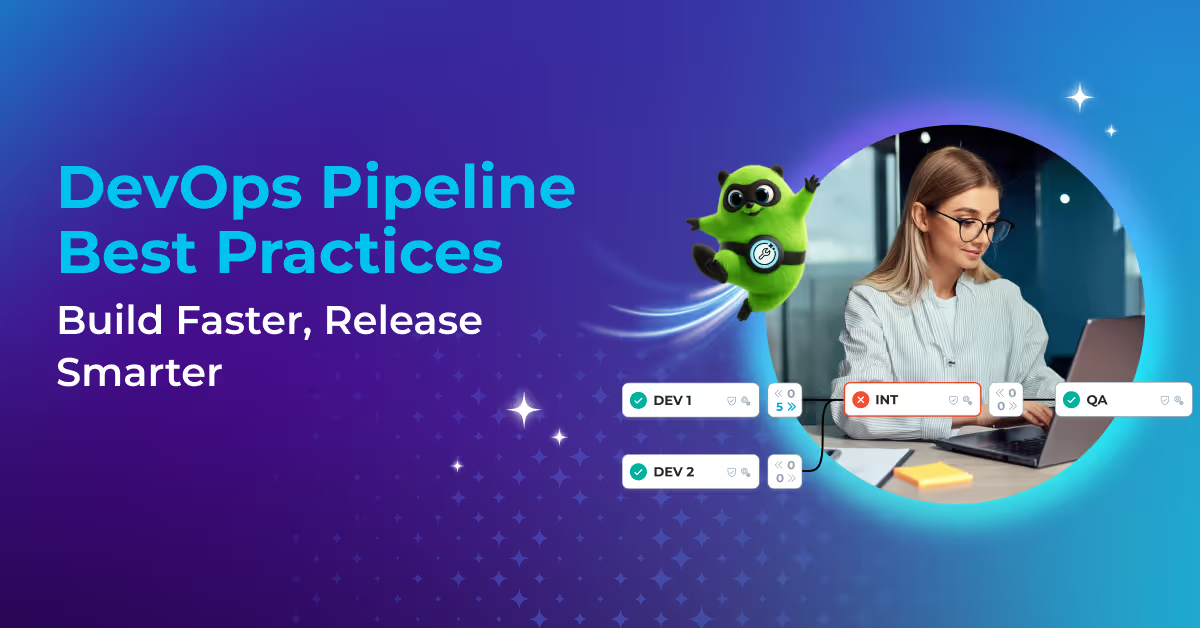
Copado’s AI devops solutions bring clarity to that complexity. Instead of juggling deployments, compliance, and testing manually, you get a Salesforce-native platform that helps you:
Whether you’re working with Einstein or scaling Agentforce solutions, Copado helps you move faster without sacrificing control. Because release days should feel predictable, repeatable, streamlined, and stress-free.
Choosing between Agentforce vs Einstein isn’t about aligning with your goals. If your priority is insights and incremental improvement, Einstein is a strong, proven choice. If you’re ready to embrace automation at scale and let AI take action, Agentforce opens the door to a new way of working.
For most enterprise teams, the future isn’t either/or, but it’s both. Einstein provides the intelligence. Agentforce delivers the action. And with the right DevOps foundation in place, you can turn that combination into real, measurable impact, faster than ever before.
Because at the end of the day, it’s not about the tools. It’s about what you build with them, and how confidently you get there.
より速くリリースし、リスクを排除し、仕事を楽しんでください。
Try Copado Devops.
Explore our DevOps resource library. Level up your Salesforce DevOps skills today.


.avif)


.svg)

